




STRATEGIES OF BEING AND PHILOSOPHY OF LAW AND ETHICS HAVE BEEN PRESENTED TO THE READERS
Professor of Philosophy Tursyn Gabitov and Associate Professor Pirimbek Suleimenov have presented to readers their works Strategies of Being and Philosophy of Law and Ethics. The monograph Strategies of Being examines the theoretical principles of ontology within the context of global and domestic spiritual and civilizational paradigms. This monograph represents a system of texts united by a specific idea and objective. Individual topics are presented from the authors’ perspective and have been executed in accordance with contemporary societal demands, responding to the needs of the Kazakh educational discourse. Within the worldview paradigm of the state program Cultural Heritage, an attempt has been made to move away from outdated Marxist clichés in explaining the historical-philosophical process characteristic of certain older models of ontology. The monograph is intended for undergraduates, master’s and doctoral students, lecturers, researchers, and readers interested in philosophical issues.
The textbook Philosophy of Law and Ethics analyzes the formation and development of the values of legal culture from the standpoint of the principle of virtue. The worldview foundations of legal and moral consciousness, their meaning and content are considered at a theoretical level of cognition. The book can contribute to promoting Kazakh ethical and legal values in the context of reviving national culture and spiritual identity, mastering the state program Cultural Heritage, and fostering virtue and anti-corruption awareness among the younger generation. Furthermore, the principles, ideas, results, and conclusions presented by the authors can be applied in courses in law, cultural studies, ethics, as well as in specialized courses within law enforcement disciplines.
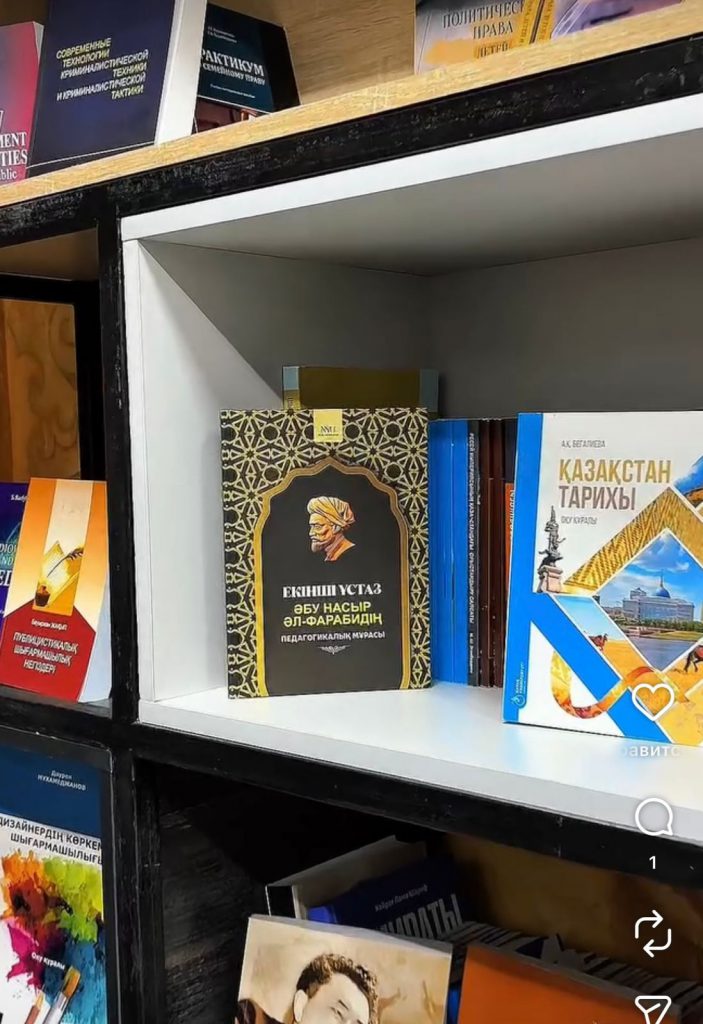
Additionally, Associate Professor of Philosophy Pirimbek Suleimenov, together with Ы.Палтөре and А.Мустафаев, published the collective monograph The Second Teacher: Pedagogical Heritage of Abu Nasr al-Farabi. In this collective monograph, Abu Nasr al-Farabi’s pedagogical theories are examined within the context of Islamic culture and worldview of the Arab Caliphate, in line with the scientific-educational traditions of that era, and in relation to the ideas of ancient Greek philosophers, while being discussed in the contemporary educational system. A scientific analysis is provided concerning his concepts, principles, and methodology of teaching, education, and upbringing. The book is intended for professionals, researchers of al-Farabi’s heritage, and inquisitive readers.